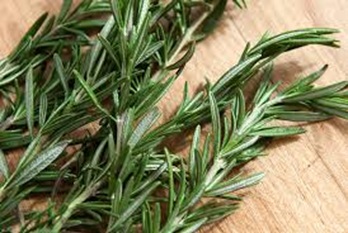
Botanic name: Rosmarinus officinalis 1
Common name: Rosemary1
Habitat: Rosemary is native of the Mediterranean region and now grows widely in other parts of the world 2.
Actions: antibacterial, antidepressant, antispasmodic, antiseptic, circulatory tonic, diffusive stimulant 3.
Active constituents: Essential oil (cineole, pinene, camphor and smaller amounts of beta-pinene, borneol, limonene, terpineol and verbinol), phenolic acids (rosmarinic), bitter diterpenes (carnosol, rosmanol), triterpenes (oleanic and urolic acid), triterpene alcohols, flavonoids and their glycosides (diosmetin, luteolin, genkwanin) 4.
Indications: Alopecia (rosemary oil topically), headache, myalgia (rosemary oil topically), neuralgia (rosemary oil topically), anxiety, poor concentration and memory, cardiovascular weakness, debility, depression, flatulent dyspepsia 3,4.
Of interest: The ancients believed that it strengthened the memory and it also became the emblem of fidelity and for lovers 5.
Sources:
1. Braun L, Cohen M. Herbs & Natural Supplements. An evidence-based guide. 3rd ed. Sydney: Churchill Livingstone; 2011.
2. Ehrlich S, 2011, Rosemary, The University of Maryland Medical Centre, viewed 10 July 2012, http://www.umm.edu/altmed/articles/rosemary-000271.htm
3. Bone K. A Clinical Guide to Blending Liquid Herbs. Sydney: Churchill Livingstone; 2003.
4. Prescribe Guide. Rosemary [Internet]. 2014 [cited 2014 Feb 09]. Available from: https://www.prescribeguide.com/rosmarinus-officinalis
5. Grieves, M. A Modern Herbal. Rosemary [Internet]. 2014 [cited 2014 Feb 09]. Available from: http://botanical.com/botanical/mgmh/r/rosema17.html
Leave a Reply